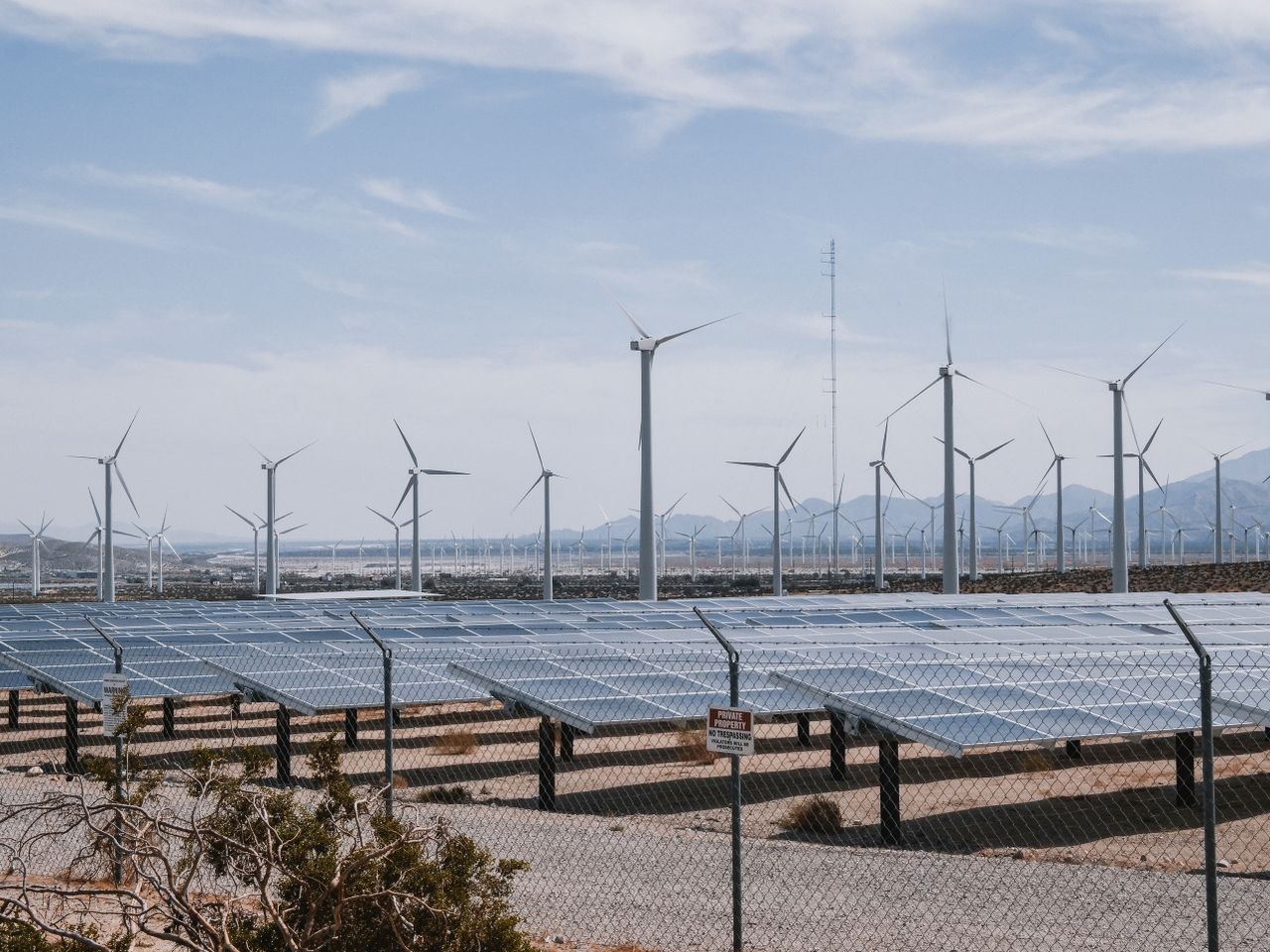
Southeast Asia's renewable energy sector has crossed a threshold. It is no longer a policy ambition. It is an active capital deployment landscape with live project pipelines, grid integration challenges, and regulatory frameworks evolving at different speeds across different markets.
Electricity demand in Southeast Asia grew by more than 7% in 2024, nearly double the global average, driven by rapid urbanisation, population growth, industrialisation, and rising living standards. Meeting that demand cleanly requires scale and speed that the region is only beginning to match.
Global clean energy investment reached approximately USD 2.2 trillion in 2025, with renewables alone accounting for around USD 780 billion. Southeast Asia is increasingly cited as a primary destination for private capital flowing into distributed solar, mini-grid, and storage projects.
Utility-scale solar and wind capacity in ASEAN grew 20% in one year to over 28 GW, putting the region on track to meet its 35% renewable energy capacity target ahead of schedule. Yet only 3% of all prospective utility-scale capacity in the region is currently under construction.
The gap between pipeline and active construction is the defining challenge of the regional energy transition. It reflects:
Grid connection approvals, land acquisition, and environmental clearances move at different speeds across markets, with Indonesia and the Philippines among the most complex environments for project developers.
Insufficient grid infrastructure investment is a persistent hurdle for integrating utility-scale solar and wind, with gas and coal still expected to grow in coming years as national energy policies treat gas as a stepping stone in the transition.
Many prospective projects have offtake agreements in principle but cannot close financing because the counterparty risk profile of state-owned utilities does not satisfy international lender requirements.
Understanding which projects in which markets are actually moving through the development pipeline, and which are stuck in regulatory or financing limbo, requires practitioners who are actively developing or financing renewable assets in the region.

Vietnam leads the region's installed renewable base. Between 2015 and 2024, Vietnam led ASEAN in new wind and solar generation, adding 9 TWh of wind and 12 TWh of solar. The country's first offshore wind farm is set to operate by the end of 2025, signalling plans to export electricity to Singapore and Malaysia.
Indonesia is the region's largest energy market and its most complex renewable development environment. Under RUPTL 2025 to 2034, PLN targets 60 GW of new renewable capacity, including the 250 MW Mentari Java solar project. Indonesia's government has committed to deploying 100 GW of solar across the country.
Philippines and Vietnam hold the largest prospective pipeline. The Philippines and Vietnam have 99 GW and 86 GW respectively of prospective utility-scale solar and wind, together representing 80% of the region's total prospective capacity.
Floating solar is an emerging opportunity across multiple markets. Rystad Energy projects floating PV will play a key role in Southeast Asia's solar expansion, accounting for 10% of the region's total solar capacity by 2030, with the Philippines, Indonesia, and Thailand identified as the leading markets for this technology.
The opportunity is real. The execution risk is equally real. Three factors consistently distinguish projects that close from those that stall:
The gap between a government's announced renewable energy targets and the permitting timeline for an individual project is consistently wide. Practitioners who have completed project development cycles in specific markets hold intelligence that no published regulatory guide captures.
The cost and timeline of grid connection varies dramatically by location, utility, and project type. This is often the factor that determines project viability, and it is rarely captured in published feasibility data.
Understanding how specific utilities in specific markets are approaching power purchase agreements, and what the realistic risk-adjusted return looks like under different regulatory scenarios, requires direct practitioner knowledge.
For investment teams and project developers researching Southeast Asia's energy transition landscape, or specifically Indonesia's energy sector, Konnect connects you with energy project developers, grid engineers, regulatory specialists, and infrastructure finance practitioners who are inside these markets now.

Connect with Konnect and get matched with the right specialist within days.