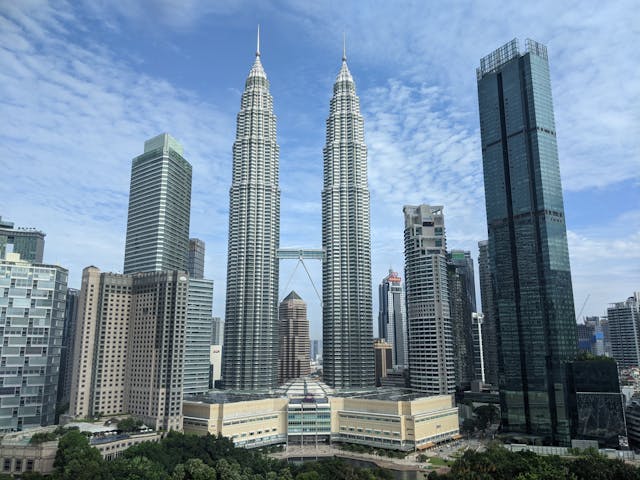
Kuala Lumpur is no longer a secondary destination for investors and multinational corporations entering Southeast Asia. It has become a primary one.
Greater Kuala Lumpur strengthened its position as a top regional hub in 2024, with InvestKL securing RM 4.08 billion in foreign investments from 12 leading global companies, creating 4,394 executive jobs and contributing to a cumulative RM 33.8 billion in committed investments from over 150 global companies to date.
For investment teams and corporate strategists, this acceleration creates a clear research imperative. The intelligence required to make credible decisions about Kuala Lumpur's market, its competitive landscape, regulatory environment, and sector dynamics, cannot be sourced from published data alone. It requires direct access to practitioners who are operating inside the city's business ecosystem right now.
Kuala Lumpur's positioning is distinctive within Southeast Asia. Greater KL's rise as a strategic destination for global companies spans sectors including IT infrastructure, consumer healthcare, materials science, financial asset servicing, and renewable energy, with strong momentum in AI, digital, and technology-driven investments.
This diversity creates a research challenge. The city is not a single-sector hub. It is a multi-sector, multi-industry ecosystem where the dynamics in financial services differ materially from those in technology, and where the regulatory environment for each sector has its own complexity and pace of change.
Companies specifically choose Kuala Lumpur because it is the upcoming hub of Southeast Asia, offering a multilingual and multicultural workforce, significant shared services presence, an experienced talent pool, and supportive government incentives.
Understanding what these advantages mean in practice for a specific investment or market entry mandate requires practitioners who have navigated them firsthand. Reports describe the framework. Expert calls provide the operational reality behind it.

Malaysia's financial services sector is one of the most sophisticated in Southeast Asia, with a particularly distinctive Islamic finance segment that operates under a different set of product structures, regulatory requirements, and competitive dynamics than conventional finance. Practitioners with direct experience in both conventional and Shariah-compliant financial products consistently provide intelligence that sector reports cannot replicate at the operational level.
In December 2024, Malaysia launched a national AI office with seven key goals, including an AI code of ethics, regulatory framework, and a five-year technology action plan through 2030.The data center buildout in the Klang Valley has made Malaysia one of the most active technology infrastructure investment destinations in Southeast Asia. Teams evaluating these opportunities need practitioners with direct experience in Malaysia's regulatory environment, power infrastructure, and the operational dynamics of hyperscale deployments.
Malaysia's consumer market combines a sophisticated urban middle class with meaningful variation across ethnic communities, regional geographies, and income segments. Distribution dynamics, brand positioning strategies, and channel economics all reflect this complexity in ways that generic Southeast Asian market analysis does not capture.
Kuala Lumpur has become a significant hub for global business services, shared service centres, and regional headquarters operations. Understanding how companies are building out these functions, what talent dynamics look like, and how the regulatory and cost environment compares to regional peers requires practitioners who have managed these operations in the market.
Many research mandates involving Kuala Lumpur extend beyond Malaysia's borders. Investment teams evaluating Malaysian assets frequently need to compare them against the broader Southeast Asian market landscape. Corporate strategy teams assessing Kuala Lumpur as a regional headquarters location need to understand how it compares to Singapore, Jakarta, and Bangkok simultaneously.
Expert networks that provide cross-market coverage within a single engagement framework give these teams the ability to run parallel research without building separate research pipelines for each market. The same platform that connects a team with a Malaysian financial services practitioner can connect them with Indonesian consumer goods operators and Thai manufacturing specialists within the same research cycle.
Konnect is a global expert network connecting organizations with experienced industry professionals across 500+ sub-verticals to access real-world insights and informed perspectives. With strong expertise across Southeast Asia and global markets, Konnect facilitates structured conversations that help decision-makers better understand industries, market dynamics, and emerging opportunities.
Konnect's Malaysia coverage spans financial services, technology, consumer goods, manufacturing, and professional services. Most engagements move from brief to first expert call within days.

Connect with Konnect and get matched with the right specialist.